
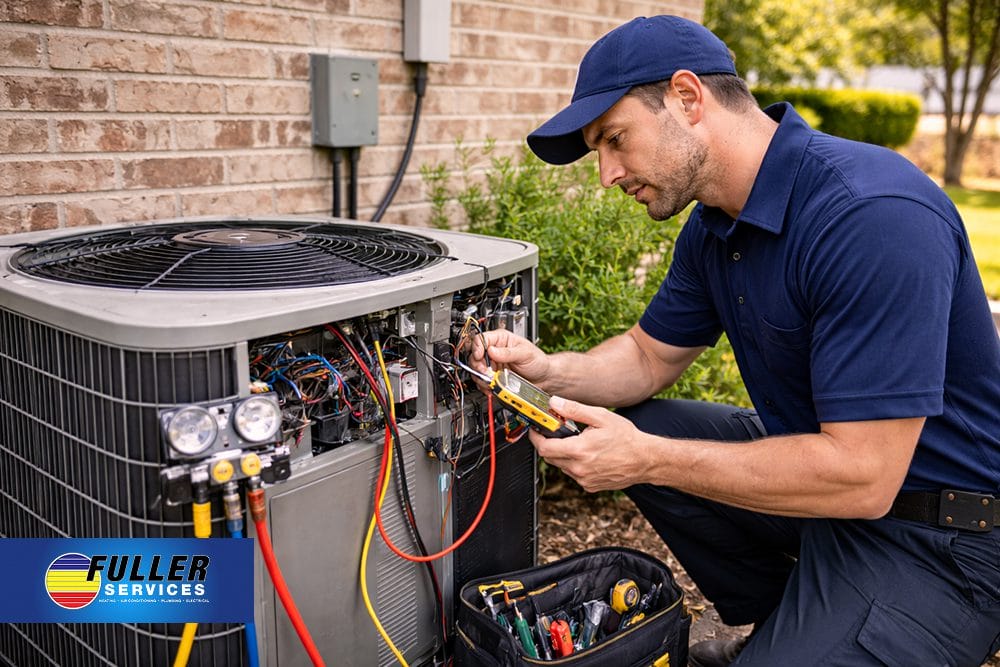
Is once a year really enough for an Alabama summer? In North Alabama, long cooling seasons, high humidity, and heavy spring pollen can put extra strain on AC systems and increase the risk of breakdowns when you need them most.
For many homes in the Shoals, scheduling AC maintenance twice a year is a smart way to keep the system running reliably. This guide explains the best times to schedule service, what a tune-up usually includes, and which factors, like older equipment or indoor pets, may mean your system needs more attention.
How Often Should You Schedule AC Maintenance in Alabama?
If you live in the Shoals, your air conditioner likely runs for over 2,500 hours every year – nearly double the usage seen in cooler states. To combat this workload, we recommend two professional visits per year: once in the spring to prep for the heat and once in the fall to ready your heating system.
While national averages often suggest a single annual checkup, Alabama’s humidity and extended cooling season from March through October demand more frequent care. This second visit prevents several localized risks:
- Humidity Overload: Your AC pulls gallons of water from the air daily. Without a professional AC tune-up, algae buildup in condensate drains can cause clogs that lead to expensive indoor water damage.
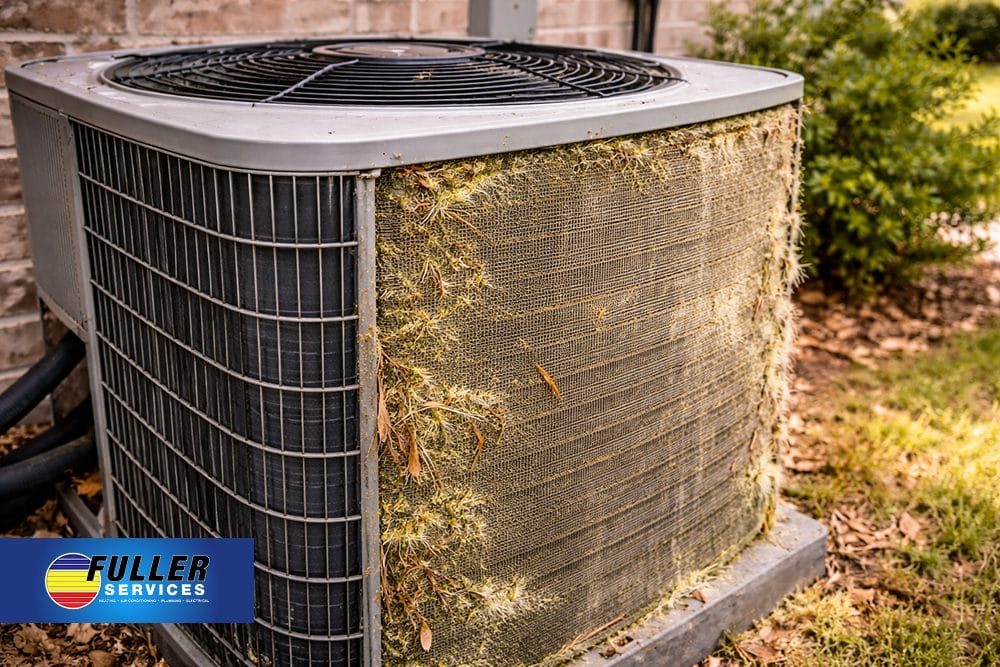
- Pollen and Dust: Heavy spring pollen blankets outdoor coils. This acts as an insulation layer that forces the compressor to work harder, which can spike monthly utility bills by 15% or more.
- Mechanical Fatigue: Long cooling cycles put constant strain on capacitors and motors.
If your budget is tight, one visit per year is the absolute floor. However, skipping the second inspection often results in a mid-July breakdown when repair lead times are longest and temperatures are at their peak.
The Best Months to Schedule AC Maintenance in Alabama
Imagine it’s a humid Saturday in May and your AC won’t kick on, but every reputable technician in the Shoals is booked for two weeks. This is a common reality for homeowners who wait for the weather to break before calling.
To stay ahead of the rush, follow this specific Alabama timeline:
- Spring Visit (March-April): Your goal is to clean and test the system before the first stretch of triple-digit heat and high humidity.
- Fall Visit (September-October): This visit clears out summer debris and verifies that heating components are safe for the winter.
Avoid the “danger months” of May and June when appointment demand peaks. July and August are the most expensive times for a breakdown because extreme heat increases the risk of emergency repairs. Property managers should begin multi-unit batch work even earlier in late winter. Scheduling early keeps you off the waiting list and protects your home during the peak of summer.
Customizing Your AC Schedule: Who Needs More Than Two Visits a Year?
Does your Alabama home fall into a high-demand category that requires extra attention? While twice a year is the standard baseline, specific environmental factors often demand a more aggressive schedule to prevent premature system failure.
Use this checklist to see if your property needs more frequent maintenance:
- Coastal Properties: Salt air in areas like Mobile or Gulf Shores can cut a unit’s operational lifespan by 50%. Homeowners should rinse the outdoor unit with freshwater every 2 to 4 weeks. Professionals should perform deep cleanings and apply corrosion protection at least twice yearly.
- High Pollen Areas: Alabama’s heavy spring pollen loads coils and filters rapidly. This restricts airflow and forces the system to run longer cycles to reach your thermostat setting.
- Pets or High Occupancy: Extra dander and lint mean filters often need 30-day intervals and additional mid-season checks to prevent blower motor strain.
- Systems Over 10 Years Old: Older units are prone to capacitor failures and drain line clogs. A quick mid-summer check prevents total shutdowns during peak July heat.
Maintaining a regular schedule also protects your manufacturer warranty. If your system is already struggling with reduced airflow or unusual noises, you likely need targeted AC repair rather than a routine tune-up. Always keep service documentation to prove compliance with warranty requirements.
Professional Tune-Ups vs. Your DIY Maintenance Routine
Nearly 95% of air conditioning failures are preventable through consistent maintenance. While a professional tune-up handles technical tasks like measuring refrigerant, testing electrical components, and deep-cleaning coils, your DIY routine is the primary defense against Alabama humidity.
Here’s what our AC maintenance visit includes. Between visits, protect your system with these steps:
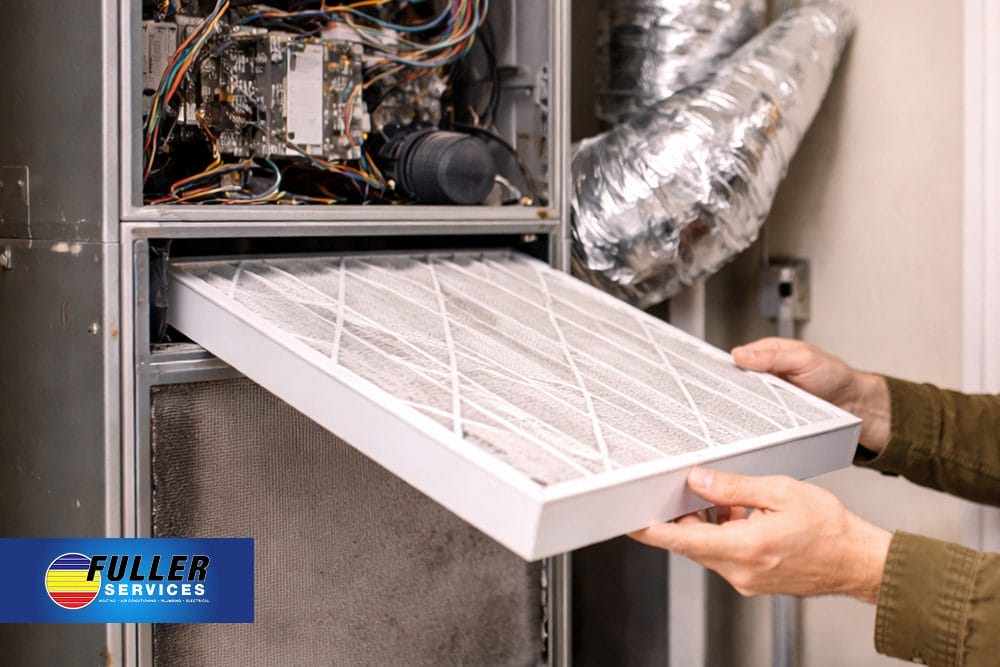
- Swap filters monthly: High pollen and humidity in the Shoals clog filters quickly.
- Maintain clearance: Keep 2 to 3 feet of clear space around the outdoor unit.
- Watch the drain: Stay alert for musty odors or water pooling near the indoor unit, which signals a clogged condensate line.
Now that you know the cadence and the exceptions, here’s the simplest schedule to follow.
How to Build Your Alabama AC Maintenance Schedule
Alabama’s climate turns HVAC maintenance into a survival strategy for your home. Since local systems run nearly 2,500 hours every year, mechanical wear happens faster here than in other parts of the country. Sticking to a consistent schedule prevents the mid-summer breakdowns that occur when pollen-clogged coils meet extreme humidity.
Use this framework to protect your investment:
- The Alabama Baseline: Schedule professional tune-ups in the spring (March to April) and fall (September to October) to stay ahead of peak usage. Fuller HVAC’s Comfort Club builds this schedule in automatically, so you’re not the one remembering to book each visit.
- High-Demand Systems: If you live in a coastal area, have an older unit, or manage heavy pet dander, add a monthly outdoor coil rinse and consider a mid-season inspection.
- Action Triggers: Schedule service immediately if utility bills rise unexpectedly, airflow feels weak, or you notice musty smells. These signals often point to drain line clogs or motor strain that lead to expensive repairs if ignored.
Fuller HVAC, Plumbing & Electrical has served the Shoals region as a family-owned business since 1991. Our technicians provide the expert maintenance required to extend the life of your equipment and prevent midnight emergencies. To get your system ready for the upcoming season, contact our team today to book your appointment.
Frequently Asked Questions
Is it really necessary to service my AC twice a year in Alabama?
Yes, most Alabama homes require two professional visits per year because the systems run for nearly nine months out of twelve. While once a year might suffice in cooler climates, the extreme humidity and heavy pollen in the Shoals region put double the strain on your cooling and heating equipment.
What is the best month to schedule AC maintenance in the Shoals?
You should aim to schedule your spring tune-up in March or early April before the first major heat wave hits. Scheduling during these shoulder months means you beat the summer rush when local technicians are often booked two weeks out for emergency repairs.
How often should coastal Alabama homes clean their outdoor AC units?
Homeowners in coastal areas should rinse their outdoor units with fresh water once or twice a month to remove salt spray. Professional deep cleaning and corrosion prevention treatments should also be scheduled at least twice a year to prevent the salt air from corroding the aluminum fins and copper tubing.
Will skipping professional maintenance void my AC warranty?
Most major manufacturers require proof of annual or semi-annual professional maintenance to keep your parts and labor warranty valid. If a major component like a compressor fails, the manufacturer may deny your claim if you cannot provide service records showing the unit was cared for by a licensed professional.
Can DIY maintenance replace a professional AC tune-up?
DIY tasks like changing filters and clearing debris are essential, but they cannot replace the technical safety and performance checks performed by a professional. A technician from a local company, such as Fuller HVAC, tests electrical capacitors and measures refrigerant pressures that require specialized tools and certified training to handle safely.