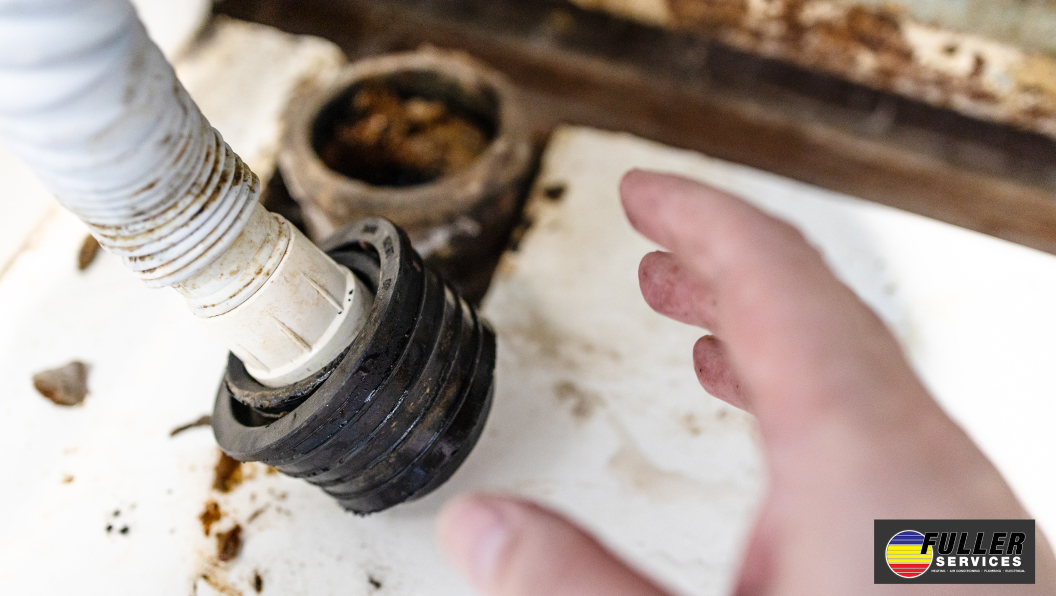
Slow drains are among the most common plumbing problems in any home, and Fuller Heating, Air Conditioning, Plumbing & Electrical clears them across the Shoals. Whether it is a kitchen sink that takes too long to clear or a shower that backs up every few days, the most common drain clogs come from a short list of predictable causes. Here is what causes them, room by room, and what you can do to keep them from coming back.
What causes most drain clogs?
Most drain clogs start with everyday materials that build up gradually inside the pipe. In kitchens, it is cooking grease and food scraps. In bathrooms, it is hair binding with soap scum. In toilets, it is products that say flushable but do not break down in water. The pattern holds whether you are in Muscle Shoals, Florence, Sheffield, or Athens: the same materials cause the same blockages in homes across the Shoals region.
Understanding the difference between a fixture-level clog and a main sewer line problem matters, too. A single slow sink or shower points to a localized obstruction, usually in the trap or branch drain. When multiple fixtures drain slowly at once or you hear gurgling from drains you are not using, the blockage sits deeper in the shared sewer lateral.
Kitchen sink clogs: grease, food waste and coffee grounds
Kitchen drains clog when grease, cooking oil, and food particles accumulate inside the pipe over time. Grease is the main culprit. It goes down as a liquid and hardens on the pipe wall once it cools, trapping everything that flows past afterward. A single pan of bacon grease can start the buildup that takes months to become a full blockage.
A garbage disposal does not protect your drain. It grinds solid food, but ground food still travels through your pipes. If those pipes already have a grease coat on the walls, the small particles stick and the line narrows steadily.
Common items that clog kitchen drains:
- Cooking grease, lard, and cooking oil
- Coffee grounds, which clump and do not dissolve
- Starchy foods: pasta, rice, and potato peels that expand in water
- Fibrous vegetables: celery, corn husks, and artichoke leaves
- Eggshells and bones that the disposal cannot break down finely enough
The fix is simple but takes consistency. Let grease cool in a container and trash it. Scrape plates before rinsing. Run cold water during and after using the disposal to push particles through the trap, not let them settle inside it.
Bathroom clogs: hair, soap scum and toothpaste
Bathroom drain clogs form when loose hair binds with soap residue inside the drain. Hair does not dissolve. It catches on the drain stopper, inside the P-trap, or on any rough surface inside the pipe, and from there acts like a net that collects everything else passing through.
Modern grooming products accelerate the problem. Clay masks, thick body scrubs, bath bombs, and heavy conditioners are oily and dense. They coat the inside of the pipe and create a tacky layer that snags passing hair fast. Wiping heavy cosmetic residue into a towel before rinsing makes a real difference.
Common bathroom drain clog contributors:
- Shower and sink hair (biggest single cause in bathroom drains)
- Bar soap and shampoo residue that builds up over time
- Toothpaste accumulating around the drain stopper
- Thick cosmetic products: clay masks, body butters, exfoliating scrubs
- Bath bombs with oils or glitter that do not dissolve fully
Shallow blockages near the drain opening respond well to a barbed plastic drain tool (zip strip). Pull the hair out rather than pushing it deeper. For anything that has moved past the P-trap, a plumber’s drain snake is the right next step.
Toilet clogs: flushable wipes and what actually flushes
Toilets handle two things: human waste and toilet paper. That is the complete list. Products labeled flushable, including wipes, facial tissues, paper towels, and feminine hygiene products, belong in the trash.
Toilet paper breaks down quickly in water. Wipes do not. Even when a wipe clears the bowl, it can snag inside the drain line and begin collecting other debris. Over time, a dense blockage forms that neither a plunger nor chemical cleaner can reach effectively.
What belongs in the trash, not the toilet:
- Wipes, even those labeled flushable
- Paper towels and facial tissues
- Cotton swabs and cotton pads
- Feminine hygiene products
- Dental floss
A toilet that repeatedly backs up on its own usually has a localized blockage in the trapway or branch drain. A toilet that gurgles or pushes wastewater into an adjacent tub when you flush signals a shared-line restriction that needs an urgent sewer inspection.
Main line clogs: tree roots and pipe bellies
When several drains in your home slow down or back up at the same time, the problem is usually in the main sewer line, not any single fixture. Three causes account for most main line clogs.
Tree root intrusion happens when roots follow moisture and find hairline fractures or aging joints in the sewer pipe. Once inside, they grow into dense mats that catch everything flowing through the line. In older Shoals neighborhoods, this is especially common because the underground pipes are older and the trees are mature.
Pipe bellies are low spots that form when soil shifts and a section of pipe loses its downward slope. Waste pools in the low spot instead of flowing through, and the accumulation grows.
Deep debris blockages form farther down the sewer lateral than any household tool can reach, often from years of grease, mineral scale, or foreign material building up past the branch drain.
Signs that point to a main line clog:
- Multiple fixtures draining slowly at the same time
- Wastewater backing into a tub or shower when you flush the toilet
- Gurgling from drains you are not currently using
- Foul sewer odors inside the house
We diagnose main line problems with a sewer camera inspection before clearing anything. The camera shows exactly where the blockage is, what caused it, and which method will resolve it cleanly.
What mineral buildup does to Shoals-area drain lines
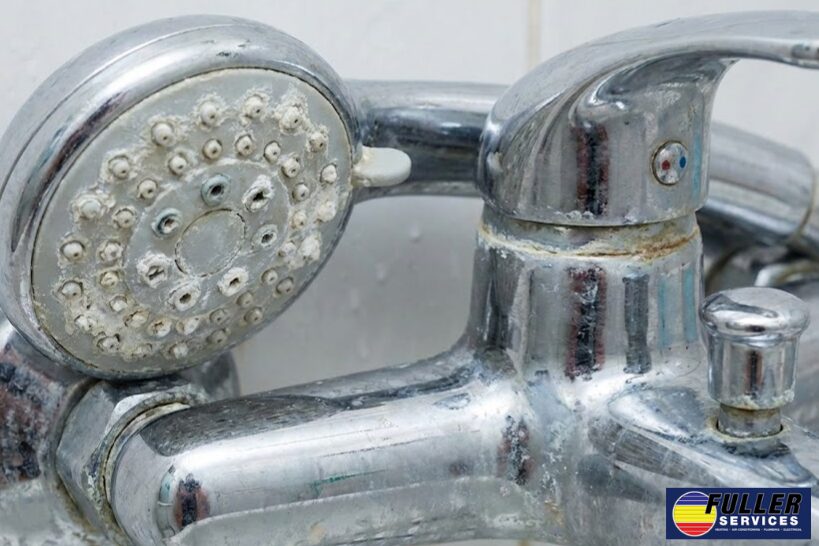
Water in the Shoals region is moderately hard. Over time, mineral deposits coat the inside of pipes, narrowing the passage and creating rough surfaces where hair, grease, and soap scum stick more readily. The scale does not dissolve on its own, and standard drain cleaners are not designed to remove it.
You can recognize mineral buildup by a few patterns:
- Chalky white residue around faucets, showerheads, and drain openings
- Drains across multiple fixtures gradually slowing over several months
- Clogs that return quickly after clearing, even with proper drain tool use
If your Muscle Shoals or Florence home shows these signs alongside recurring clogs, a camera inspection gives you a clear picture of how much scale is present and where. Treating the water supply can slow new buildup, but it does not remove existing scale and it will not clear a clog caused by roots or pipe damage. Treatment is a preventive step, not a substitute for plumbing service.
How to prevent kitchen drain clogs
The most reliable way to keep kitchen drains clear is to keep grease and food scraps out of the pipe. That sounds obvious, but most kitchen clogs form from small habits repeated daily: rinsing a greasy pan, pouring off cooking oil, letting coffee grounds wash down the sink.
Prevention habits that hold up over time:
- Let grease cool in a container and throw it away, never pour it down the drain
- Install a fine-mesh sink strainer and empty it every day
- Run cold water for 15 seconds before, during, and after using the garbage disposal
- Scrape plates into the trash before rinsing to reduce the load on the disposal
- Keep coffee grounds, pasta, rice, potato peels, and fibrous vegetables out of the drain entirely
If you already have a slow kitchen drain, plunge it first. If it does not clear, do not pour chemical cleaner down it. The cleaner will likely fail and leave you with a pipe full of caustic liquid. Call us for professional drain cleaning in Muscle Shoals or the surrounding area before the buildup gets worse.
How to prevent bathroom drain clogs
Bathroom clogs are largely a maintenance problem. A few consistent habits keep them from forming in the first place.
What works:
- Put a mesh hair catcher over every shower and tub drain and clear it after each use
- Remove and clean the sink pop-up stopper once a month
- Brush hair before showering to reduce how much ends up going down the drain
- Wipe thick cosmetic products off into a towel before rinsing to cut down on oily residue in the pipe
- Use a barbed plastic drain tool for shallow hair buildup near the drain opening every few weeks
For a clog that does not clear with a drain tool, a plumber can clear the P-trap or run a drain snake without the risk that chemical cleaners carry. The next section covers why chemical cleaners are the wrong first move.
Why chemical drain cleaner is the wrong first move
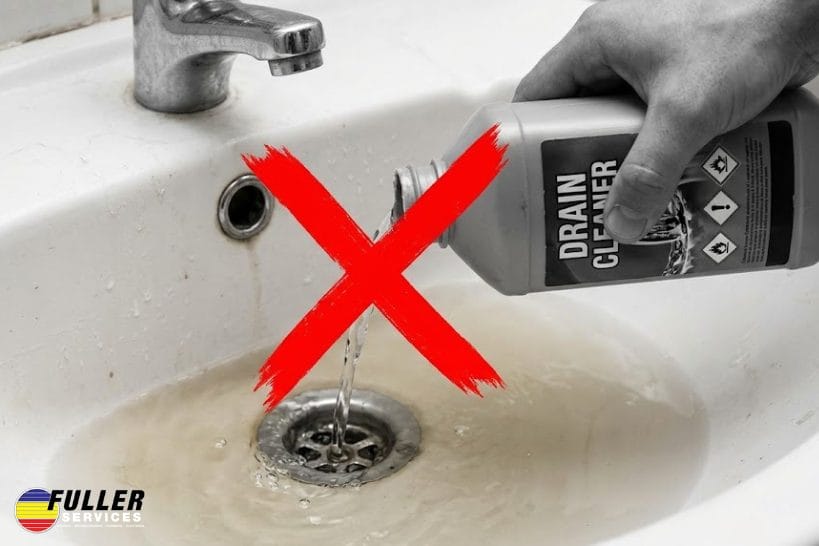
Chemical drain cleaners feel like an easy fix. Pour the bottle, wait, and the clog is supposed to dissolve. In practice, they often cause more problems than they solve.
The active ingredients in most formulas, sodium hydroxide (lye) or sulfuric acid, generate intense heat when they react with water. That heat is meant to break down organic material like hair. It also softens PVC pipe fittings and accelerates corrosion in older cast iron and galvanized steel pipes.
When a clog is dense enough to stop water flow completely, chemical cleaners usually fail anyway. The product cannot reach the blockage if standing water fills the drain. You end up with a pipe full of caustic liquid that a plumber then has to work around carefully.
| DIY Alternative | Why It Falls Short |
|---|---|
| Baking soda and vinegar | Neutralizes odors but cannot dissolve a dense hair mat or congealed grease |
| Boiling water | Can warp thin PVC fittings, soften rubber washers, and damage toilet wax rings |
| Step | Safer Sequence for a Minor Isolated Clog |
|---|---|
| Step 1 | Remove and scrub the drain stopper or strainer |
| Step 2 | Pull shallow hair out with a barbed plastic drain tool |
| Step 3 | Plunge with a cup plunger, sealing any overflow vents with a wet rag first |
| Step 4 | Place a bucket under the P-trap, loosen the slip nuts, and clear debris manually |
If those steps do not clear it, stop. Call us. A professional drain cleaning costs far less than replacing pipe fittings damaged by repeated chemical cleaner use.
When a clog is actually a sewer line problem
Some symptoms point to a main sewer line blockage rather than a simple fixture problem. These situations need professional diagnosis and equipment, not a plunger and a wait-and-see approach. A sewer backup can cause significant water damage quickly, and it tends to get worse, not better, on its own.
Call us right away if you notice any of these:
- Multiple drains backing up at the same time
- Water from one fixture backing up into another (flushing the toilet causes the tub to fill)
- Gurgling sounds from drains you are not using
- Sewage odors inside the house
- A clog that returns quickly after clearing, every time
A damaged sewer line can also leak underground. Our guide to the signs of a hidden water leak covers what to look for.
We diagnose sewer line problems with a camera inspection first. The camera shows exactly where the blockage is, what caused it (roots, collapsed pipe, pipe belly, heavy grease), and which method will fix it. From there, we use mechanical cable clearing, hydrojetting, or sewer clearing based on what the camera reveals.
If you are in Florence, Athens, or anywhere across the Shoals and you are seeing these signs, reach out to us for drain and sewer service before it escalates.
How much does professional drain cleaning cost?
Pricing for drain cleaning depends on the access point, line depth, what the camera inspection finds, and which method clears the clog.
We provide upfront pricing before we start any work. You know what a job costs before we pick up a tool. That is standard practice for us, whether you are calling from Muscle Shoals, Athens, Sheffield, or Tuscumbia.
For an accurate quote on your situation, call us at (256) 381-7195 or schedule online.
Call (256) 381-7195 for Drain Service
Frequently asked questions about drain clogs
What causes most drain clogs?
Hair and soap scum cause most bathroom drain clogs. Cooking grease and food scraps cause most kitchen clogs. In toilets, wipes and products that do not break down in water are the main offenders. Mineral scale and tree roots are behind the most stubborn, recurring blockages. If a single fixture drains slowly, the problem is usually isolated to that drain’s trap or branch line. If several fixtures back up together, the restriction sits in the main sewer lateral.
How do I prevent kitchen drain clogs?
Scrape grease and food scraps into the trash before rinsing dishes. Use a fine-mesh strainer over the drain and empty it daily. Run cold water during and after using the garbage disposal. Avoid putting starchy foods, fibrous vegetables, coffee grounds, or cooking oil down the drain.
How do I stop hair from clogging my shower drain?
Put a mesh hair catcher over the drain and clear it after every shower. Clean the pop-up stopper monthly. For shallow buildup already in the drain, use a barbed plastic drain tool to pull hair out rather than push it deeper. If the drain continues to slow after you clear the strainer and stopper, hair and soap scum have likely built up past the P-trap and a plumber’s snake is the right next step.
Are flushable wipes actually flushable?
No. Wipes do not break down in water the way toilet paper does. Even when a wipe clears the bowl, the synthetic fibers can catch on pipe joints inside the drain line and begin collecting other material. Trash them regardless of what the label says.
Is chemical drain cleaner safe for pipes?
Chemical drain cleaners are not recommended for recurring or complete clogs. The active ingredients generate intense heat that can soften PVC fittings and accelerate corrosion in older cast iron or galvanized pipes. For a fully blocked drain, they often cannot even reach the clog through standing water. Stick to mechanical tools, or call a plumber to clear the line safely.
Why does my drain keep clogging after I clear it?
A drain that keeps clogging means the underlying obstruction was not fully removed. A plunger or consumer drain snake usually punches a small opening through the clog rather than clearing it completely. Recurring clogs also point to deeper causes: tree root intrusion, pipe bellies, heavy mineral scale, or a broken underground pipe. A camera inspection shows exactly what is causing the pattern.
Can tree roots get into my drain line?
Yes. Tree roots follow moisture and can penetrate hairline cracks, aging pipe joints, or loose connections in the sewer lateral. Once inside, they grow into thick mats that catch debris. It is more likely in older neighborhoods with mature trees and aging pipes. Hydrojetting and sewer clearing are the standard treatments for root-affected lines.
What is hydrojetting and when is it used?
Hydrojetting uses high-pressure water to scour the inside of a drain or sewer pipe. It removes grease, mineral scale, root tendrils, and debris that cable clearing leaves behind. We use it after a camera inspection confirms the pipe is structurally sound enough to handle high-pressure flushing. It is the most thorough cleaning method available for lines with heavy buildup.
How do I know if I have a main line clog vs. a fixture clog?
A single slow or backed-up drain is usually a fixture-level problem in that drain’s trap or branch line. When multiple drains are sluggish, gurgling, or backing up at the same time, the blockage is in the main sewer line or a shared branch. That requires a camera inspection to diagnose, not a plunger.
How much does drain cleaning in Florence AL or Athens AL cost?
Drain cleaning cost depends on the line being cleared, how deep the clog is, and whether the job calls for cable clearing or hydrojetting. We provide upfront pricing before we start, so you always know what the job costs. Call us for a quote specific to your situation.
Whether you are dealing with a slow sink, a backed-up shower, or a main line backup across the Shoals, Fuller Heating, Air Conditioning, Plumbing & Electrical has the tools and the experience to clear it. We have been serving North Alabama since 1991, with 4.8 stars across 2,100+ reviews and BBB accreditation since 1993. We clear the most common drain clogs across the Shoals with upfront pricing and licensed plumbers.