
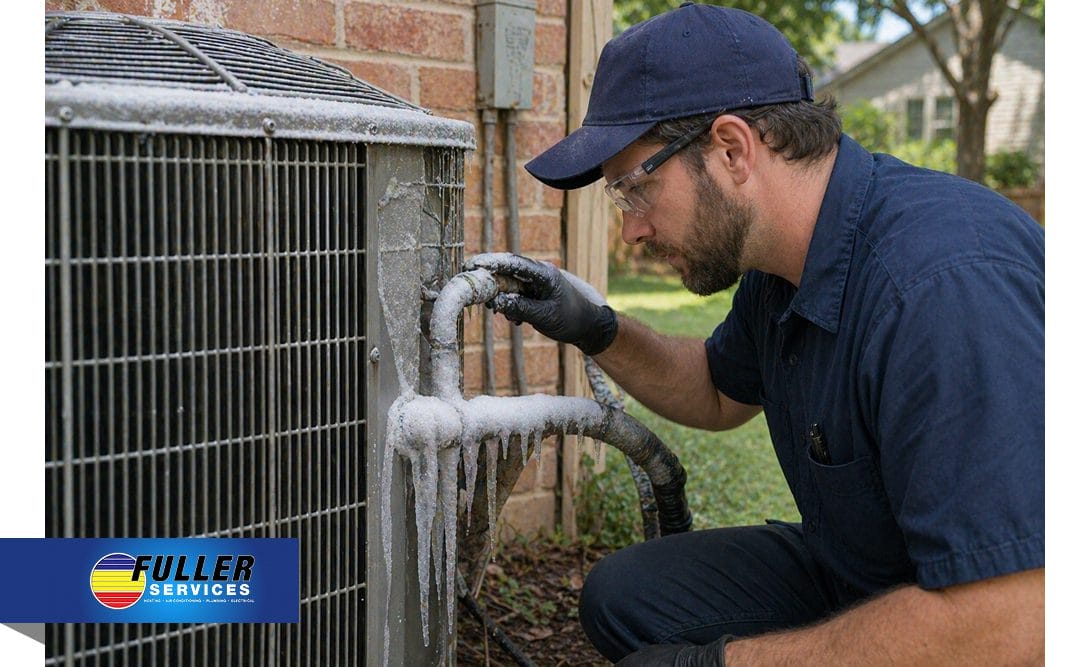
Is your AC running but your home still feels warm and muggy? If you see ice on the lines or notice weak airflow, your system may be freezing up due to an airflow problem or low refrigerant pressure, not because it is cooling properly.
This guide explains the most common reasons an AC freezes up, what to do first, and when to call for professional repair. For now, turn the cooling off right away and let the system thaw safely to help prevent more serious damage.
What to Do When Your AC Freezes Up: The 6-Step Crisis Playbook
Don’t chip ice off your coils or lines. While it is tempting to scrape away the frost, a single slip can puncture delicate copper fins and cause a refrigerant leak. This common mistake can turn a simple thaw into a total coil replacement.
If you see ice on your system, follow this step-by-step playbook to speed up the defrosting process safely:
- Turn cooling OFF at the thermostat. This stops the cooling cycle and protects the compressor from extreme mechanical strain while the system is blocked.
- Set the blower fan to ON (not Auto). This forces warm indoor air across the frozen coils, melting the ice much faster than letting it sit.
- Check the air filter immediately. Restricted airflow is the most common reason why an AC freezes up. If the filter is dusty or grey, replace it to restore proper air pressure.
- Clear obstructed vents. Confirm furniture, curtains, or rugs are not blocking return grilles or supply vents, which starves the system of air.
- Allow a full thaw. This typically takes 2 to 12 hours. Do not restart the cooling until the ice is completely gone and the condensate pan has drained.
- Monitor the restart. If the unit refreezes within 24 hours, you likely have a refrigerant leak or a failing blower motor.
To prevent future ice-ups, schedule regular AC maintenance. If your unit refreezes, you need a professional AC repair to find the root cause. For expert help in the Shoals area, contact Fuller HVAC today.
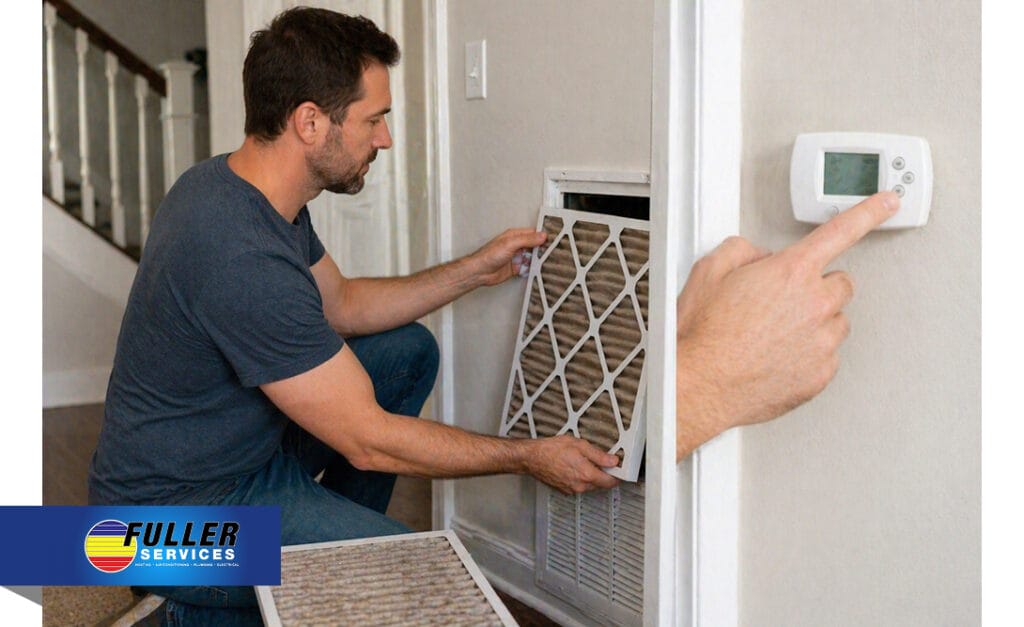
Why Is My AC Freezing Up? Understanding the Coil Freeze
Have you ever wondered why an air conditioner built for 95 degree Alabama heat would suddenly turn into a block of ice? While it seems counterintuitive, your system relies on a delicate balance of pressure and airflow. Inside your home, the evaporator coil holds cold refrigerant that absorbs heat from your indoor air. If that heat transfer is interrupted, the coil temperature drops below 32 degrees. The moisture the system pulls from the air freezes instantly, creating a layer of frost that eventually chokes the entire system.
Cause 1: Restricted Airflow
In approximately 80% of the service calls we handle in the Shoals region, restricted airflow is the primary culprit. When warm air cannot reach the coil, the refrigerant stays too cold.
- Clogged Filters: During a North Alabama summer, your system runs nearly 24/7. A standard 1-inch filter can clog in as little as 30 days. If the filter looks grey or fuzzy, it is starving the system of air.
- The High-MERV Irony: Many homeowners upgrade to MERV 13 filters for better air quality, but these filters are often too restrictive for older blowers. If freezing started right after a filter upgrade, temporarily switch back to a MERV 8 or a high-surface-area option to see if airflow improves.
- Blocked Returns: Confirm your return grilles are not obstructed by furniture or heavy curtains.
Cause 2: Drainage and Mechanical Failures
A clogged condensate drain line can back up water into the pan. This standing water increases local humidity around the coil, which accelerates ice buildup. You can safely check the drain pan for standing water or signs of algae and slime.
Mechanically, if the filter is clean but airflow is weak at every vent, the blower motor or its run capacitor may be failing. A blower that does not reach full speed allows the coil to drop into the freezing zone. Watch for unusual humming sounds or intermittent starts. This is a task for an AC repair professional.
Cause 3: Low Refrigerant and Outside Temperatures
It sounds backward, but low refrigerant makes a coil colder. When refrigerant levels drop, the pressure inside the system also falls. Lower pressure results in a lower boiling point, causing the refrigerant to evaporate at temperatures well below freezing. This ices up the coil and the outdoor suction line.
Additionally, running your AC when outdoor temperatures are below 60 degrees can cause a freeze. The system is not designed to operate in cool ambient air, leading to a pressure imbalance.
Diagnostic Decision Tree
- If the filter is dirty: Replace it, thaw the system for four hours, and retest.
- If the filter is clean but airflow is weak: You likely have a failing blower motor or a dirty internal coil. Call for service.
- If airflow is strong but the unit refreezes: This indicates a refrigerant leak or restriction. Turn the unit off and call a technician.
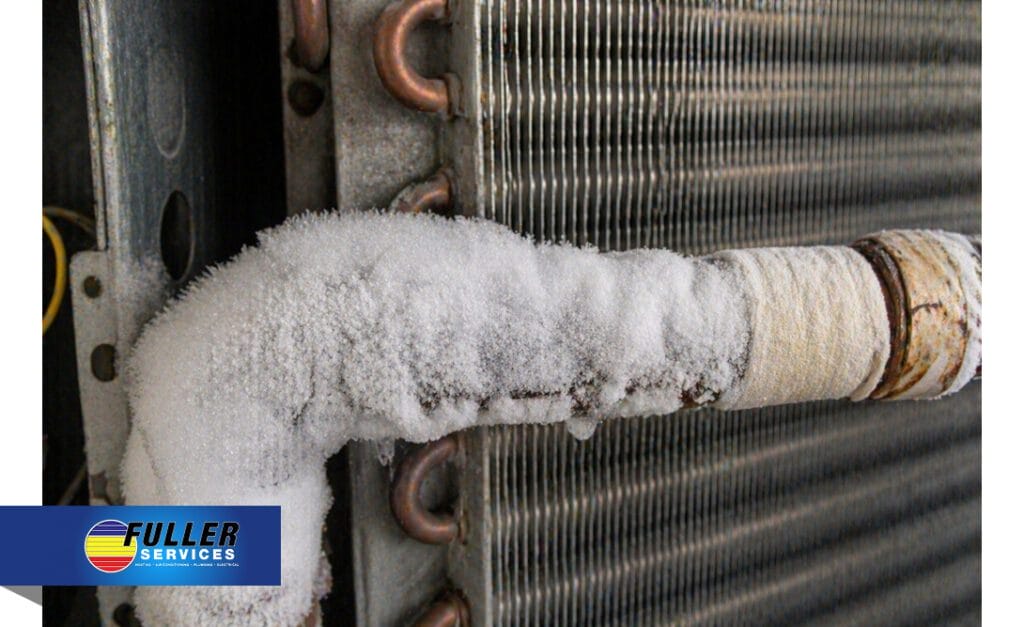
When to Put Down the Filter and Call a Professional
Did you swap the filter and thaw the unit only to see frost returning within minutes? This indicates a mechanical failure that DIY fixes cannot solve. Ignoring repeat freezing risks “slugging” the compressor, which often leads to a full system replacement costing $2,000 or more.
Call a professional if you notice these triggers:
- Ice returns after a full thaw and filter change.
- Airflow stays weak at every vent with a clean filter.
- You see ice on the large copper suction line.
- Water is overflowing from the indoor drain pan.
A Fuller technician performs a total diagnostic instead of just “topping off” the system. We verify static pressure, test the blower capacitor, and inspect the evaporator coil for debris. Routine AC maintenance catches 90% of these airflow issues before they cause a breakdown. If your system is currently frozen, contact Fuller HVAC for transparent AC repair from the Shoals’ most trusted team.
How to Handle a Frozen AC and Prevent a Repeat Performance
A frozen air conditioner means the balance between airflow and refrigerant has been disrupted. When ice forms, your system is either suffocating from low airflow or leaking vital cooling fluid. To protect your equipment from permanent compressor damage, use this three-step response plan.
- Stabilize and Thaw Safely
Immediately set the thermostat to “Cool OFF” and the “Fan ON.” This circulates warm air to melt the ice naturally. Never scrape or chip at the ice. Copper coils are fragile, and a single puncture leads to an expensive and avoidable replacement.
- Restore the Airflow
Once the unit has fully thawed, replace your air filter and confirm all supply and return vents are unobstructed. If the system cools normally afterward, a clogged filter was likely the only problem.
- Escalate for a Professional Diagnosis
If ice returns within 24 hours of a filter change, you likely have a refrigerant leak or a mechanical issue like a failing blower motor. Stop running the unit immediately to prevent the compressor from burning out.
Most freeze-ups are entirely preventable by pairing a high-quality filter with a professional AC maintenance cadence. If your system continues to ice up, contact the team at Fuller HVAC for a precise diagnosis to restore your home’s comfort.
Frequently Asked Questions
How long does it take for a frozen AC unit to thaw?
Thawing a frozen air conditioner typically takes between 2 and 12 hours depending on the severity of the ice buildup. While light frost may melt in a few hours, a heavy block of ice surrounding the evaporator coil requires significant time to dissipate completely. Setting your thermostat fan to the ON position while the cooling is OFF will accelerate this process by circulating warm indoor air. Do not attempt to restart the cooling cycle until the ice is entirely gone, or the unit will likely refreeze within minutes.
Can I use a hair dryer or hot water to melt the ice on my coils?
No, avoid using hair dryers or pouring hot water directly on frozen coils. Intense heat can cause thermal shock that cracks the delicate copper tubing, while water can damage sensitive electrical components within the air handler. The safest and most effective way to defrost your system is by using time and the unit’s own blower fan. If the ice is thick enough to cause concern about indoor water damage, it is best to place towels down and wait for a natural thaw.
Can a high-MERV air filter cause my air conditioner to freeze up?
Yes, high-MERV filters can cause an AC to freeze if they create too much airflow resistance for your specific blower motor. These thick filters are excellent for air quality but can starve the system of the air it needs to keep the coil above freezing temperatures. If your freezing issues began shortly after you upgraded to a higher-rated filter, try switching back to a standard MERV 8 filter as a diagnostic step. You can ask a technician at Fuller HVAC to test your system’s static pressure to see which filters are safe for your equipment.
Why does my AC freeze up at night but work fine during the day?
Air conditioners often freeze at night because dropping outdoor temperatures cause the refrigerant pressure to fall below its normal operating range. When the outdoor air is cooler, the system does not have enough heat to absorb, which allows the evaporator coil to drop below 32 degrees. This is a common issue in Alabama during the spring and fall when evening temperatures fluctuate. Adjusting your thermostat to a slightly higher setting at night or using a programmable schedule can often prevent these temperature-related freeze-ups.
What is the difference when a window AC or mini-split freezes up?
Window units and ductless mini-splits have much smaller, more compact coils that can clog with dust and pet hair far faster than central systems. Because these units have smaller airflow paths, even a minor amount of debris can lead to a total ice-over in a short amount of time. Check the reusable filters on these units at least once a month during the summer. If a mini-split continues to freeze despite clean filters, it may have failing sensors or a localized refrigerant leak.
Can I just add more refrigerant if I think the system is low?
No, you cannot simply top off refrigerant because modern air conditioning systems are sealed loops. If the refrigerant level is low enough to cause freezing, it means there is a physical leak or a restriction that must be professionally repaired first. Adding more gas without finding the leak is a temporary and expensive fix that can eventually lead to a total compressor failure. Licensed technicians must perform this work to confirm the system is pressurized correctly and meets environmental safety standards.