
If your AC keeps turning on and off, your system is likely short-cycling. This frequent starting and stopping ruins indoor comfort, keeps humidity high, drives up energy bills, and puts severe wear on your compressor.
This guide helps homeowners safely diagnose the issue in under 20 minutes. You will learn how to resolve simple thermostat or filter problems and know exactly when to call a professional. If you smell burning, hear loud electrical buzzing, or see ice on your system, skip these steps and call for service right away.
To follow along, grab a phone timer, a flashlight, and a clean air filter.
If you are in Northwest Alabama and need professional support, call or schedule online with Fuller HVAC.
Step 1: Track and Time Your AC Cycles
Professional technicians rely on exact run times to pinpoint system health. Grab your phone timer and track three consecutive cooling cycles to gather evidence.
- Record the on-time: Note how many minutes the outdoor condenser runs before shutting off.
- Record the off-time: Note how many minutes the system rests before restarting.
Normal cycles typically run for 10 to 20 minutes, depending on the outdoor heat load. Short cycling occurs when cooling run times last only 2 to 5 minutes and repeat frequently.
Note variables like extreme outdoor temperatures, your thermostat setpoint, recent filter changes, a new thermostat install, or whether the system struggles to reach your set temperature. This simple log creates a diagnostic baseline to guide your troubleshooting or share with a technician.
Step 2: Inspect Your Thermostat Settings and Power Supply
Before assuming you need a major AC repair, check your thermostat. A simple communication or power issue is often why an AC keeps turning on and off.
Quick Thermostat Checks
- Replace batteries: Install fresh alkaline batteries and restart the unit.
- Verify settings: Confirm the mode is set to COOL and the fan to AUTO.
- Check placement: Keep the thermostat away from direct sunlight, supply vents, exterior doors, and warm appliances.
Run the AC for 15 to 20 minutes after making changes to verify the cycles return to normal.
Smart Thermostat Pitfall: The Missing C-Wire
If short cycling began after installing a Nest or Ecobee, check for a dedicated C-wire (common wire). Without it, power-stealing from the control board can trigger rapid on/off pulsing. A professional can run a C-wire in under an hour and solve the problem for good.
Step 3: Restore Airflow and Inspect for Freeze-Ups
Restricted airflow triggers safety shutoffs from overheating or icing, causing your AC to turn on and off. Check these areas to restore system balance.
- Replace the air filter: Slide out your filter. If it is dirty, replace it. The replacement size should match your system exactly and the airflow arrow should point toward the blower.
- Clear grilles and vents: Confirm return grilles are not blocked by furniture and keep supply vents open throughout the home.
- Look for ice: Check the refrigerant lines near the indoor unit for ice or water pooling around the air handler.
If you spot ice, turn the system OFF immediately to let it thaw and prevent permanent compressor damage.
Knowing when to replace your HVAC air filters is one of the simplest ways to prevent airflow restrictions that lead to short cycling.
Step 4: Clear the Outdoor Condenser and Check for Overheating
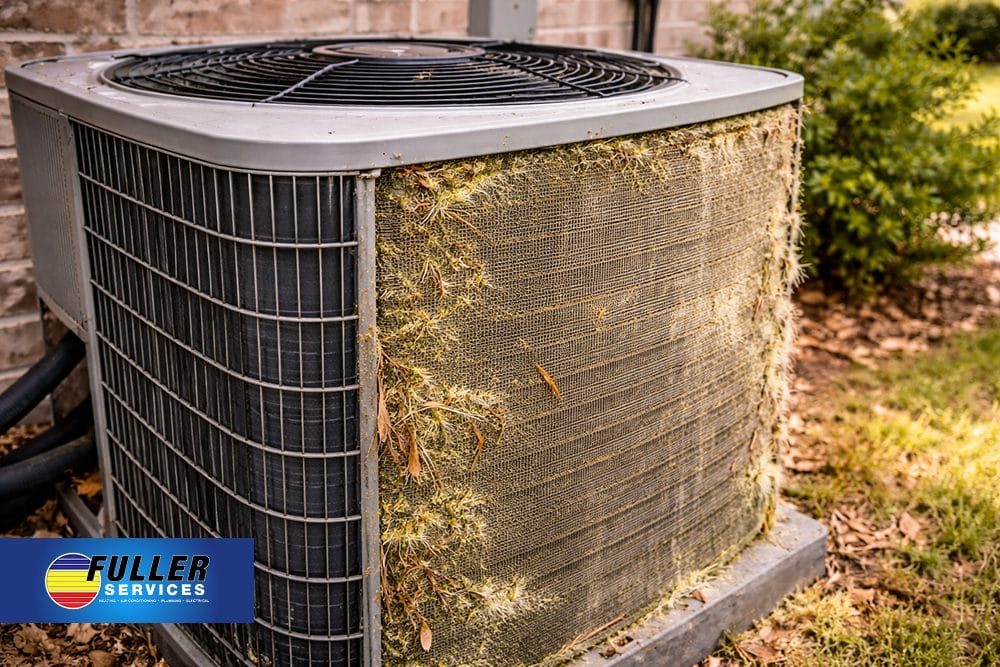
Walk outside to your condenser cabinet while the system runs. Clear at least two feet of space around the unit by removing leaves, weeds, or grass clippings, and verify that the top fan spins smoothly.
Blocked airflow causes heat to build up, forcing a protective safety shutdown to prevent compressor damage. Symptoms of this overheating cycle include the unit starting, running briefly, and stopping while blasting hot air upward or rattling.
Safety Warning: Never open the electrical panels or touch capacitor terminals. If airflow is clear but the cycling continues, move on to Steps 5 and 6.
Step 5: Check the Condensate Drain and Safety Float Switch
WARNING: Turn off your thermostat before inspecting the wet areas around your indoor air handler.
Your indoor AC unit produces condensation as it dehumidifies. When the drain line clogs, a safety float switch trips and cuts power to prevent water damage. This safety cycle can cause your AC to turn on and off repeatedly, especially on highly humid days.
- Locate the secondary drain pan beneath your indoor unit.
- Shine a flashlight inside to check for standing water or dampness.
- Confirm the plastic drain line is not kinked or blocked at the outdoor outlet.
If you see standing water, turn the AC system off immediately to prevent ceiling damage and schedule professional service.
Step 6: Know When to Call a Professional HVAC Technician
DIY guesswork at this stage can destroy your compressor. Call a professional if any of the following apply.
- Recurring ice: Ice returns quickly after thawing, indicating low refrigerant or a deep airflow issue. Read our guide on signs your AC has a refrigerant leak to learn more.
- Electrical faults: The outdoor fan runs inconsistently, relays click, or you smell burning.
- New installation: Short cycling happens right after a replacement, suggesting a sizing or duct design issue.
- Safety trips: A pressure safety switch or compressor overload repeatedly trips.
A technician will test refrigerant pressures, capacitor health, electrical connections, and static pressure. Contact Fuller HVAC for a fast diagnosis. For scheduling or questions about preventive HVAC maintenance, reach out anytime.
Call (256) 330-6065 for Same-Day Service
Pro Tips for Preventing AC Short Cycling
- Log your cycles: Note runtimes, outdoor temperatures, and your thermostat model to speed up professional diagnostics.
- Check the C-wire: Make sure smart thermostats have a dedicated common wire to prevent power fluctuations that mimic system failure.
- Keep vents open: Closing registers restricts airflow, which causes coil icing and triggers safety shutdowns.
- Monitor humidity: If your home feels clammy while cool, ask an expert about system sizing and dehumidification.
Consider ductless: Resolve uneven cooling in stubborn rooms with a ductless mini-split system.
Frequently Asked Questions About AC Short Cycling
How long should a normal AC cooling cycle run?
A healthy air conditioner runs for 10 to 20 minutes per cycle. Outdoor temperatures, home insulation, and unit size naturally affect these runtimes. If your system runs for only a few minutes repeatedly, it is short-cycling.
Is it bad if my AC keeps turning on and off?
Yes. Rapid cycling places extreme wear on the compressor and electrical parts, causing premature system failure. It also spikes your energy bills and prevents the AC from pulling humidity out of the air, leaving your home warm and sticky.
Should I turn my AC off if it is short cycling?
Yes. If you notice ice on the indoor or outdoor lines, smell a burning odor, or see water pooling around the air handler, shut the system off immediately. Running a failing system can destroy your compressor.
Can a smart thermostat cause short cycling?
Yes. Smart thermostats that lack a dedicated C-wire often rely on power-stealing from the system control board. This power fluctuation causes the AC to cycle on and off rapidly. A professional can install a C-wire to resolve the issue.
Can I fix refrigerant leaks or electrical issues myself?
No. Federal law requires EPA certification to handle chemical refrigerants safely. Electrical components like capacitors store lethal charges even when the power is off. These HVAC repairs require a trained professional.
When does short cycling mean I need to replace the system?
If your system is oversized, nearing the end of its lifespan, or facing repeated compressor failures, replacing it is often the smartest financial move. Contact the Fuller team for an honest assessment of your AC replacement options.
Short cycling is hard on your system and your wallet. The sooner you diagnose and fix the problem, the longer your AC will last. If the steps above did not resolve the issue, Fuller HVAC’s technicians are ready to help.