There is nothing quite like a sticky July afternoon in Muscle Shoals when your AC runs continuously, yet the thermostat refuses to drop below 78 degrees. Or a damp North Alabama winter morning when your heat pump blows lukewarm air while your power bill climbs.
When your system struggles against local heat and humidity, waiting usually turns a minor fix into an expensive breakdown. For over 30 years, the family-owned team at Fuller HVAC has helped Shoals homeowners catch problems early.
This guide covers quick safe checks you can do today, key signs your HVAC system needs repair, what those symptoms mean, and a simple framework to decide between repair and replacement. If you smell gas or burning electrical odors, treat that as an urgent safety hazard and shut off power immediately.
Quick Troubleshooting Checks Before Calling for HVAC Repair
Have you ever wondered if an unresponsive AC or furnace is actually broken, or just stopped by a simple setting? These quick checks solve many “no heat” or “HVAC not cooling” issues before you pay for a service visit.
Safe Pre-Call Checklist:
- Thermostat: Confirm fresh batteries, proper setpoints, and correct mode (COOL/HEAT).
- Air Filter: Check for heavy buildup. North Alabama’s high pollen load quickly chokes airflow. Regular filter changes are a key part of routine HVAC maintenance, included with the Comfort Club.
- Breaker: Reset once; if it trips again, stop and leave it off.
- Outdoor Unit: Clear leaves and debris to restore airflow clearance.
- Drain Pan: Inspect for standing water and clear minor condensate line clogs.
- Iced Coils: Turn the system off to thaw; running frozen coils causes major damage.
Shut It Off Now — Safety Triggers:
Turn off power at the breaker immediately if you notice:
- A rotten egg smell (evacuate for potential gas leaks).
- Burning electrical smells, plastic odor, or smoke.
- Loud metal-on-metal banging or grinding.
- Repeated breaker trips on startup.
If these quick checks don’t solve the problem, schedule a diagnostic with our family-owned team.
5 Warning Signs Your HVAC System Needs Repair Before It Breaks Down
Most homeowners assume an HVAC unit is healthy as long as cool air streams from the vents. In reality, a system can blow cool air while actively damaging internal parts or doubling electric bills. A single symptom may only require a filter change, but recurring issues signal urgent trouble.
“Mechanical noise and sudden humidity changes are your system’s early warning network,” notes Randal Fuller, founder of Fuller HVAC. “Addressing a squeal early costs far less than replacing a seized compressor.”
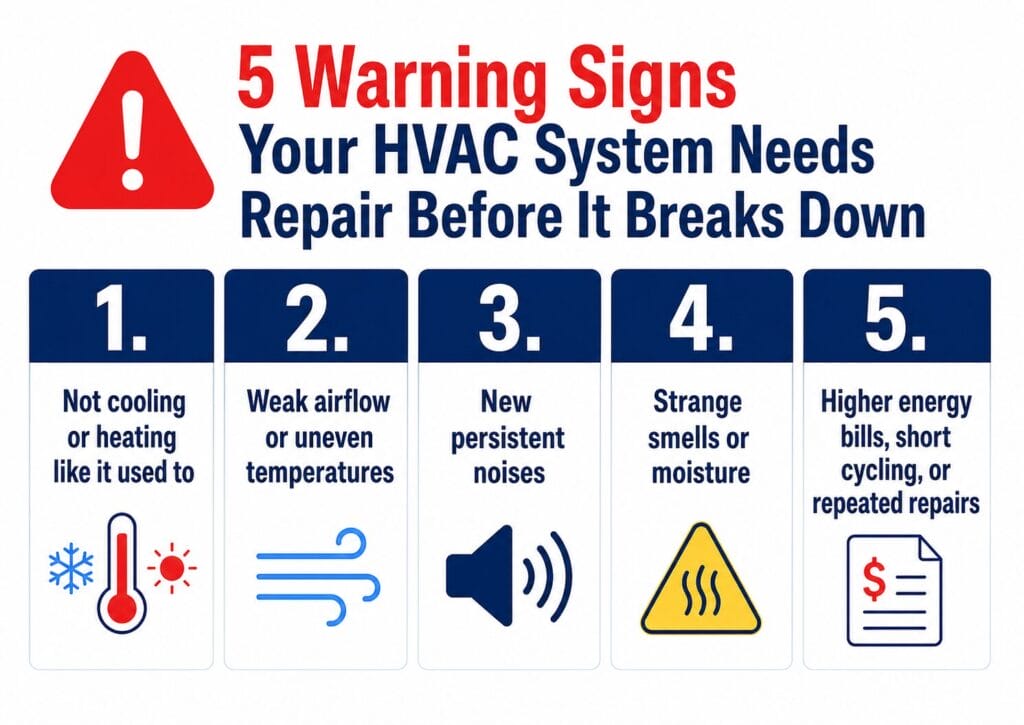
Sign 1: It’s Running, But Not Cooling (or Heating) Like It Used To
When your system runs constantly without reaching your thermostat setpoint, it has lost cooling capacity. In North Alabama’s heavy summer humidity, systems must pull moisture from the air to maintain comfort. If your home feels cool but clammy, the unit is failing under the moisture load.
- Action Level: If airflow drops to a trickle or copper lines ice over, shut off the system and schedule service.
Sign 2: Weak Airflow or Uneven Temperatures From Room to Room
If one room stays sweltering while another cools down, air distribution is failing. Causes include dirty coils, blower motor issues, or closed dampers. In older Shoals-area homes, ductwork routed through hot attics can disconnect or leak, losing conditioned air before it reaches living spaces.
- Action Level: Schedule service if a new air filter does not balance airflow.
Sign 3: New, Persistent Noises (Squeal, Buzz, Bang, Click)
Healthy HVAC units run with a steady hum. Mechanical noises signal specific component failures:
- Squeal: Worn fan belt or dry motor bearings.
- Buzzing or humming: Weak capacitor, contactor, or electrical issue.
- Banging or clanking: Loose connecting rod or fan blade.
- Action Level: Schedule service for buzzes. Stop running the system immediately if severe grinding or banging occurs.
Sign 4: Strange Smells or Moisture Where It Shouldn’t Be
Unusual odors and water leaks point to immediate risks:
- Musty “dirty sock” odor: Mold on damp evaporator coils.
- Burning odor: Overheating electrical wiring (shut off power instantly).
- Rotten egg odor: Natural gas leak (evacuate immediately).
- Water around indoor unit: Clogged condensate drain line.
- Action Level: Turn off the unit for standing water or burning smells to prevent property damage.
Sign 5: Higher Energy Bills, Short Cycling, or Repeated Repairs
Short cycling occurs when a system repeatedly starts and stops every few minutes. This rapid cycling draws heavy electrical current, accelerates wear, and inflates utility bills. Sudden bill spikes or multiple repairs in a single season indicate severe mechanical strain.
Next: what these symptoms often point to and what repairs commonly cost.
HVAC Symptom Decoder: Common Causes and Estimated Repair Costs
Nationwide, over 80% of routine HVAC repairs cost between $150 and $600, though major component failures can exceed $2,000. While a symptom is not a full diagnosis, recognizing these common signs your HVAC system needs repair helps you anticipate which component is failing.
| Warning Sign | Likely Cause | Urgency | Typical Repair Range |
|---|---|---|---|
| Outdoor unit buzzes, but the fan will not turn | Capacitor or contactor | Schedule ASAP | $120–$400 |
| Weak airflow | Blower motor or duct restriction | Schedule soon | $150–$750 |
| Ice on the indoor coil or refrigerant lines | Airflow restriction or refrigerant leak | Shut off the system to thaw | $200–$1,200 |
| Water pooling around the indoor unit | Clogged condensate drain | Shut off and schedule service | $100–$300 |
| Loud banging or metal grinding | Motor or compressor problem | Shut off immediately | $500–$2,500+ |
Exact pricing depends on system age, equipment size, and parts availability. Minor fixes like replacing a run capacitor or clearing a drain line sit on the lower end, while blower motor swaps, coil cleanings, refrigerant repairs, and compressor replacements require more labor. Fuller HVAC always provides a thorough upfront diagnosis and clear options before starting any work. If you notice these warning signs, schedule a professional HVAC repair visit to prevent further damage.
Now the big question: repair it, or is it time to replace?
Repair or Replace? The Simple Math Framework for Shoals Homeowners
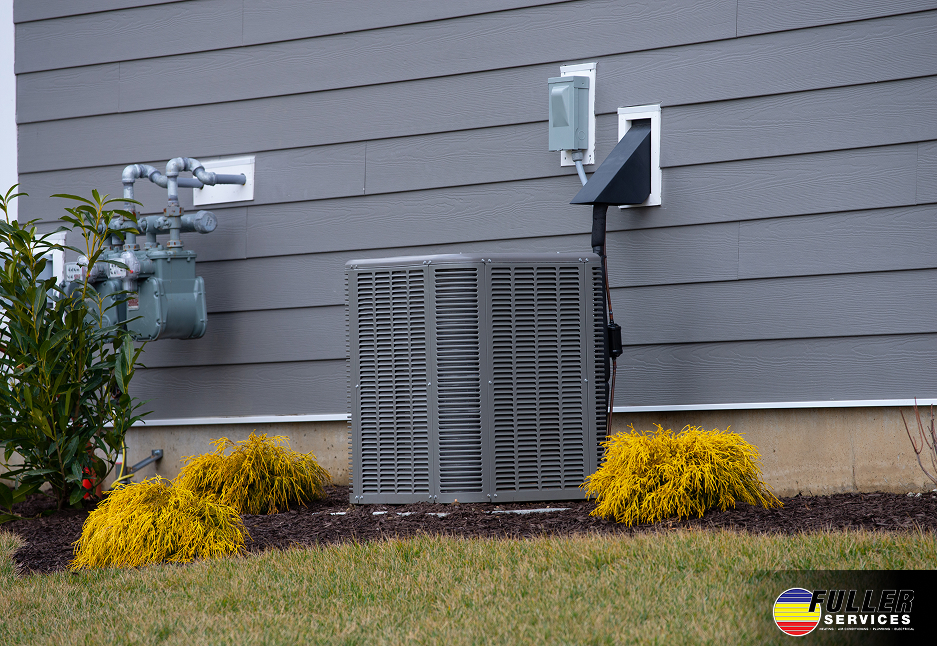
How do you know when repairing your unit makes financial sense versus throwing good money after bad? When facing an unexpected quote, these four guidelines remove the guesswork from your decision.
The HVAC Decision Framework:
| Decision Factor | Guideline | What It Means |
|---|---|---|
| Age Check | Systems under 10 years old usually warrant repair. Equipment between 10 and 15+ years is approaching end-of-life. | Routine maintenance may extend reliability, but older systems require closer evaluation before investing in major repairs. |
| The $5,000 Rule | Multiply the system’s age by the repair estimate. If the result exceeds $5,000, replacement is usually the wiser option. | A 12-year-old system needing a $450 repair equals $5,400, which points toward replacement. |
| The 50% Rule | Replace the unit if a single repair estimate costs more than 50% of a full system replacement. | A high repair cost may be better invested in new, more reliable equipment. |
| Reliability Penalty | Two or more major repairs during one cooling season signal compounding system failure. | Repeated breakdowns indicate that replacement may prevent continued repair costs and unexpected downtime. |
North Alabama Considerations:
- Long Cooling Seasons: High humidity demands strong system efficiency and continuous dehumidification to keep monthly utility bills manageable.
- Ductwork Integrity: Older Shoals-area attics often conceal leaking or undersized ducts, which reduce performance regardless of system age.
Upgrading to modern SEER2-rated equipment lowers summer energy costs, and qualifying high-efficiency units may be eligible for federal tax credits. Explore our cooling services and heating services to review options, or schedule a diagnostic consultation with our team today.
Your Action Plan When Your HVAC System Needs Repair
Spotting warning signs early prevents minor system glitches from turning into total equipment failure. Follow this decision plan based on your system’s symptoms:
| Situation | What to Look For | Recommended Action |
|---|---|---|
| Safety Emergencies | Gas smells, burning odors, or loud metal grinding | Turn off power at the breaker immediately and request emergency service. |
| Persistent Comfort Issues | Weak airflow or drifting temperatures after replacing the air filter and checking thermostat batteries | Schedule a diagnostic visit this week. |
| Aging Units | A system over 10 years old that needs frequent repairs | Request a repair-versus-replace evaluation to compare long-term costs. |
Before calling a technician, gather these key details to speed up troubleshooting:
- System age and manufacturer
- Specific symptoms (strange noises, short-cycling, warm air)
- When issues happen (at startup, during peak afternoon heat)
- Filter type and thermostat model
Since 1991, Fuller HVAC’s family-owned team has provided Northwest Alabama homeowners with upfront pricing and honest options. Investing in routine HVAC maintenance helps prevent unexpected breakdowns before they start. When you need an expert evaluation, schedule your diagnostic with Fuller HVAC today.
Schedule Your Diagnostic Today
Frequently Asked Questions
My AC is running but not cooling. What should I check first?
Check your thermostat setting, air filter, circuit breaker, and outdoor unit. Make sure the thermostat is set to COOL and below the current room temperature. A clogged filter restricts airflow, while debris around the outdoor unit hampers heat transfer. If ice is visible on refrigerant lines or coils, turn the unit off immediately to thaw before scheduling service.
What HVAC noises are an emergency?
Persistent banging, grinding, or screeching sounds indicate a serious mechanical emergency. Turn off power at the breaker panel immediately to prevent catastrophic system failure. Heavy buzzing paired with a system that refuses to start points to electrical hazards or a blown capacitor. Minor clicking at startup is normal, but metallic or severe electrical noises demand immediate professional diagnostic service.
What does a musty dirty sock smell from my vents mean?
A dirty sock smell indicates bacterial or mold growth on your evaporator coil, condensate pan, or ductwork. Moisture accumulates on cold surfaces during cooling cycles, creating an ideal environment for organic buildup. It is not usually a life-threatening emergency, but it degrades indoor air quality and requires professional cleaning to eliminate the odor and prevent spore recurrence.
When should I repair vs replace my HVAC system?
Combine equipment age with repair expense. Replace your unit if it is over 10 to 12 years old and the repair cost multiplied by age exceeds $5,000, or if a single fix costs over 50% of a replacement. Compounding repairs and rising energy costs further justify upgrading to modern equipment.
Do I really need HVAC maintenance if it’s still working?
Yes. Routine maintenance prevents sudden breakdowns and preserves efficiency even on working systems. Regular servicing catches worn parts early, keeps utility bills low, and protects manufacturer warranties. Enrolling in a maintenance program such as the Comfort Club automates your seasonal tune-ups, extends equipment life, and grants priority scheduling when unexpected issues arise.
Ready to get your home comfortable again?
Call (256) 381-7195 for Same-Day Service