

You are looking at two replacement quotes: one shows a 14.3 SEER2 rating, while the other boasts an 18 SEER2 unit with a much higher price tag. In the brutal July heat across Muscle Shoals or Athens, you want to know how SEER2 ratings affect energy bills before spending thousands extra.
A higher SEER2 rating signals better efficiency, but real-world savings depend on daily runtime, thermostat habits, ductwork, and installation quality. This guide translates laboratory scores into practical cooling-season dollars using local North Alabama energy rates.
Here is what we cover:
- SEER vs. SEER2 explained in plain English
- A quick efficiency conversion chart
- A North Alabama savings formula you can plug your numbers into
- A tier guide to help you choose the best value for your home
At Fuller HVAC, we keep the math practical for Shoals and Athens homeowners. First, what changed with SEER2?
What SEER2 Measures (And Why Lower Numbers Don’t Mean Worse Performance)
You might assume a 13.4 SEER2 air conditioner is less efficient than an old 14 SEER unit. That assumption is wrong. The new system delivers higher efficiency despite the lower number on its sticker. Understanding this distinction clarifies how SEER2 ratings affect energy bills when comparing equipment options.
SEER2 (Seasonal Energy Efficiency Ratio 2) measures total cooling efficiency for central ACs and heat pumps across a full season. The rule for homeowners is simple: a higher SEER2 rating means lower cooling electricity use for the exact same cooling delivered.
The ratings changed because Department of Energy Appendix M1 testing reflects real-world conditions rather than lab-perfect airflow. By increasing external static pressure during tests, the DOE forced systems to overcome realistic ductwork resistance.
SEER2 didn’t make equipment worse. Testing simply got tougher, so label numbers dropped. To compare old systems and new quotes, use a quick conversion and then run the bill math.
How to Compare SEER vs. SEER2 Ratings on HVAC Proposals
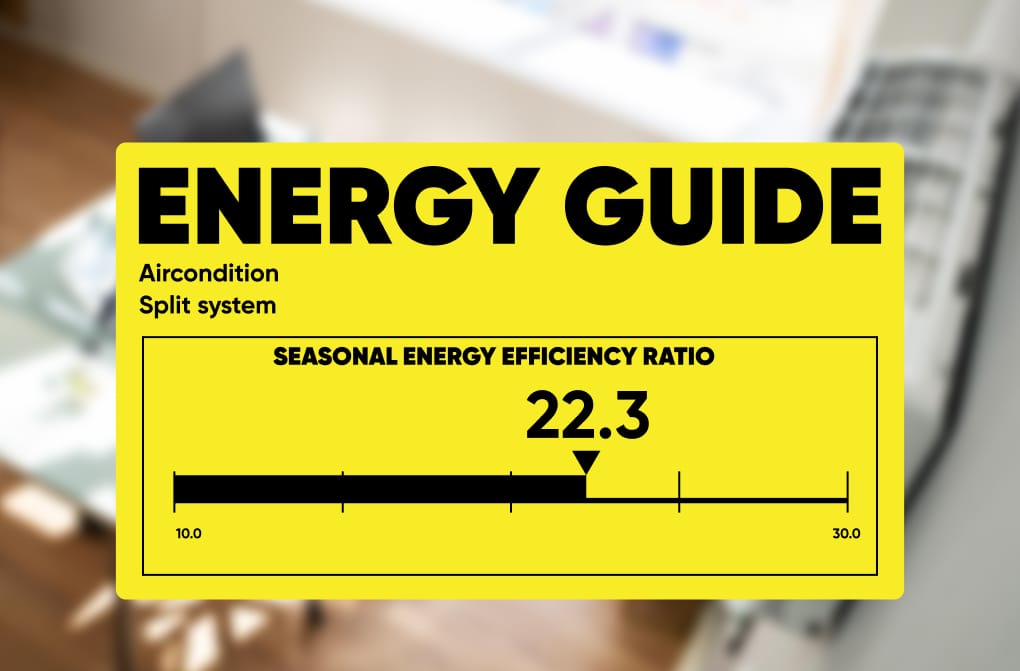
A 16 SEER rating under older testing standards equals roughly 15.2 SEER2 today. Because testing procedures changed in 2023, comparing an existing unit’s rating or an older quote to a modern estimate creates an unfair comparison. Use this quick conversion to evaluate equipment options:
| Original SEER Rating | SEER2 Equivalent |
|---|---|
| 14 SEER | 13.4 SEER2 |
| 15 SEER | 14.3 SEER2 |
| 16 SEER | 15.2 SEER2 |
| 18 SEER | 17.1 SEER2 |
Note: Exact conversions vary slightly by equipment class.
Proposal Sanity Check: Ask contractors to confirm in writing that all quoted efficiency ratings use SEER2 and request the matching AHRI certificate for the outdoor unit and indoor coil combination.
The North Alabama SEER2 Formula: Calculate Your Real Cooling Savings
Picture this: you’re sitting at your kitchen table in Florence holding an AC replacement quote for a 14.3 SEER2 unit and another for an 18.0 SEER2 system that costs $2,500 more. You don’t need to guess how long that upgrade takes to pay for itself. SEER2 ratings translate directly into estimated annual kilowatt-hours (kWh) and clear savings on your power bill.
To run the math for your home, gather three basic inputs:
| Input | Details |
|---|---|
| System Capacity | Measured in BTU/h. One ton equals 12,000 BTU/h, so a 3-ton unit is 36,000 BTU/h. |
| Annual Cooling Hours | North Alabama homes average 1,200 hours with conservative thermostat settings to 1,800 hours with heavy summer usage. |
| Effective Electric Rate ($/kWh) | Divide your total electricity bill by the total kWh used. The U.S. Energy Information Administration averages Alabama residential rates at approximately $0.145 per kWh. |
The Formula
- Annual kWh = (BTU/h x Cooling Hours) divided by (SEER2 x 1,000)
- Annual Cooling Cost = Annual kWh x $/kWh
Worked Example: 3-Ton System (36,000 BTU/h) at $0.145/kWh
At 1,200 cooling hours (low run-time) and 1,800 hours (high run-time):
| SEER2 Rating | Low Run-Time 1,200 Hours |
High Run-Time 1,800 Hours |
|---|---|---|
| 14.3 SEER2 | 3,021 kWh ($438/year) | 4,531 kWh ($657/year) |
| 15.2 SEER2 | 2,842 kWh ($412/year) | 4,263 kWh ($618/year) |
| 18.0 SEER2 | 2,400 kWh ($348/year) | 3,600 kWh ($522/year) |
Upgrading from 14.3 to 18.0 SEER2 saves roughly $90 to $135 annually in direct cooling costs.
Real-World Efficiency Reality Checks
Lab formulas assume optimal conditions. Four factors determine your actual energy savings:
- Oversized equipment: Short-cycles, reducing dehumidification and comfort during humid summers.
- Maintenance habits: Dirty filters and coils restrict airflow, dropping operational efficiency below sticker ratings.
- Ductwork losses: Leaking attic ducts can waste 20% to 30% of conditioned air.
- Installation quality: Proper airflow commissioning and refrigerant charging impact bills as much as a 1 to 2 point SEER2 jump.
Good, Better, Best: Choosing Your SEER2 Tier
Buying efficiency purely for the lowest power bill is different from buying it for consistent home comfort alongside lower monthly costs. Knowing how SEER2 ratings affect energy bills across equipment tiers helps you choose the right system without overbuying.
| Equipment Tier | Typical SEER2 Rating | Best Fit | Key Benefits |
|---|---|---|---|
| Minimum | Around 14.3 SEER2 Single-stage |
Starter homes or rental properties | Provides a solid reduction in energy bills compared to systems more than 10 years old. |
| Good | Around 15.2 SEER2 Single- or two-stage |
Homeowners planning to stay for 3 to 5 years | Offers moderate cooling savings without paying for premium efficiency. |
| Better | 16.0 to 18.0 SEER2 Two-stage or variable-speed |
Long-term homeowners | Delivers larger energy savings, improved comfort, and better indoor humidity control. |
| Best | 18.0+ SEER2 Variable-speed or inverter |
Forever homes and work-from-home households | Provides maximum energy savings, precise temperature control, and consistent comfort. |
North Alabama Tier Guidance
- Humidity matters: North Alabama’s humid summers mean multi-stage comfort features are just as important as raw efficiency numbers.
- Ductwork first: Leaky or undersized ducts prevent high-efficiency equipment from delivering its rated bill savings.
- The biggest leap: Replacing a degraded system with a standard ~14.3 SEER2 unit provides your single largest initial bill reduction.
- Payback reality: A one-point SEER2 jump takes longer to pay back than expected. Higher jumps pay off faster in high-run-hour homes.
- Comfort value: Whisper-quiet operation and steady dehumidification often justify higher tiers more than monthly utility savings alone.
HSPF2: What Heat Pump Heating Efficiency Means for Your Bills
HSPF2 (Heating Seasonal Performance Factor 2) measures heat pump heating efficiency under current testing standards. Because North Alabama winters require consistent heating, winter performance impacts your annual utility bills alongside summer cooling. When shopping for heat pumps, don’t look at SEER2 alone. Make sure the HSPF2 rating protects your winter budget too.
Higher tiers carry larger upfront costs, but financing spreads equipment payments into manageable monthly amounts to avoid sticker shock. Enrolling in the Comfort Club keeps coils clean and airflow optimal to preserve that high-tier efficiency year after year.
Ready to lower your cooling costs? Call (256) 381-7195
How to Avoid the AHRI Match Trap and Protect Your Investment
You can buy an 18 SEER2 outdoor unit and still fail to reach that efficiency if the system is not properly matched. Pairing a high-efficiency outdoor unit with an older air handler or mismatched coil restricts performance, which directly impacts how SEER2 ratings affect energy bills when wasted power inflates your monthly statement.
An AHRI Certified Reference Number proves that a specific indoor and outdoor combination was independently tested to deliver certified efficiency. Without this match, that high SEER2 sticker is just a theoretical estimate.
Matching equipment also protects tax savings. Under IRS Section 25C guidance, federal tax credits require systems to meet current-year efficiency tiers. Split systems generally need a full, AHRI-matched installation to qualify, so always save your certification paperwork for tax filings.
Before committing to a professional installation and replacement, ask your contractor for a quote detailing:
- AHRI Certified Reference Number and official certificate copy
- Exact indoor and outdoor model numbers (including the evaporator coil)
- Confirmed SEER2, EER2, and HSPF2 ratings for the specific combination
- Duct and airflow checks (static pressure commissioning)
Through our cooling services, we verify equipment matches so you get genuine energy savings. If you’re comparing quotes, we can confirm AHRI match-ups and options.
How to Choose the Right SEER2 Rating for Your Shoals Home
Selecting the ideal efficiency tier requires balancing long-term savings, daily comfort, and upfront budget. Use this simple three-step framework to make the right call:
| Step | Action | What to Consider |
|---|---|---|
| 1. Calculate Savings | Estimate potential utility bill reductions. | Combine your electric rate with your estimated annual cooling hours. |
| 2. Select Your Tier | Choose an efficiency level based on how long you plan to stay in the home. | Choose a baseline 14.3 SEER2 unit if moving within a few years. Consider a 16.0 to 18.0+ SEER2 multi-stage system for maximum efficiency, lower humidity, and quieter operation in a long-term home. |
| 3. Protect Efficiency | Confirm the system is properly designed and installed. | Require proper load sizing, a duct inspection, and an AHRI-matched system to achieve real-world efficiency ratings. |
Before You Sign: Your Pre-Installation Checklist
- Demand an AHRI number: Confirm the outdoor condenser and indoor coil are certified to work together efficiently.
- Verify SEER2 labels: Make sure all contractor quotes use current SEER2 ratings, not outdated SEER figures.
- Clarify equipment scope: Verify if the proposal covers a full system replacement or just the outdoor unit.
- Maintain performance: Book routine maintenance tune-ups or join the Comfort Club to keep running costs low.
Ready to lower your power bills? Schedule an estimate with Fuller HVAC today.
Frequently Asked Questions
What is a good SEER2 rating in Alabama?
In Alabama, 14.3 SEER2 is the current legal minimum for new installations. A rating between 15.2 and 18.0 SEER2 is ideal for most local homes. Because North Alabama experiences intense summer heat and humidity, upgrading to a 15.2+ SEER2 unit with multi-stage cooling balances upfront equipment cost with long-term monthly savings.
How much does a higher SEER2 rating really lower my bill?
Increasing efficiency by 3 to 4 SEER2 points typically reduces your annual cooling power consumption by 15% to 25%. On a standard 3-ton system running 1,800 hours over a North Alabama summer, upgrading from 14.3 to 18.0 SEER2 saves roughly $135 per year at regional electric rates. Actual savings scale based on your total cooling hours and utility rates.
SEER vs. SEER2: Why did my “16 SEER” quote turn into “15.2 SEER2”?
Your equipment choice did not become less efficient. The testing standards simply got tougher. Under the Department of Energy’s updated M1 testing procedures, systems must overcome higher external static pressure to simulate real-world ductwork. Because of these stricter testing conditions, an older 16 SEER system translates to roughly 15.2 SEER2 on modern equipment labels.
What does AHRI certified mean on an HVAC proposal?
The AHRI certified designation refers to an HVAC system combination that has been independently tested and verified by the Air-Conditioning, Heating, and Refrigeration Institute. An AHRI certificate proves that a specific outdoor unit and indoor coil work together to achieve listed SEER2 ratings. This documentation is required to verify system performance and claim federal tax credits.
Can I replace just the outdoor unit and keep my indoor coil?
Replacing only the outdoor unit is technically possible, but it usually results in lost efficiency, higher utility bills, and potential comfort issues. An older indoor coil can create airflow bottlenecks that prevent a new outdoor unit from reaching its full efficiency potential. For an apples-to-apples replacement quote, installing a fully matched indoor and outdoor system protects your efficiency and manufacturer warranty.
What does HSPF2 mean for heat pump heating bills?
HSPF2 (Heating Seasonal Performance Factor 2) measures how efficiently a heat pump warms your home during the winter season. Higher HSPF2 numbers mean lower electrical consumption on cold days, which directly reduces your winter utility bills. When selecting a new heat pump in North Alabama, review both SEER2 for summer cooling and HSPF2 for winter heating. Schedule regular tune-ups before each major season change to keep performance from slipping year to year.
Want help comparing SEER2 options for your home? Call (256) 381-7195 or schedule online.