A furnace blows cold air when the blower runs but the burners are off, or when the system is a heat pump that is behaving normally. Run four checks in order: the thermostat fan, the air filter, the ignition, and the gas supply. If you have a heat pump, read the heat pump section first, because cool air can be correct.
This guide is written for homeowners in Muscle Shoals, Florence, Sheffield, Athens, and the rest of the Tennessee Valley. Fuller has served North Alabama since 1991 under AL HVAC License #91114. Stop and leave the house if you smell gas or a carbon monoxide alarm sounds. Everything else here is safe to check from outside the furnace cabinet.
Check this first: is your thermostat fan set to ON instead of AUTO?
A fan set to ON is the most common cause of a furnace blowing cold air, and Carrier names it first. With the fan on ON, the blower runs all the time, so it pushes room temperature air through the vents between heating cycles. That air feels cold next to the warm air from a burner cycle.
A Muscle Shoals homeowner can test this in five steps at the thermostat:
- Confirm the system switch is set to HEAT.
- Raise the target temperature 3 to 5 degrees above the room reading.
- Move the fan from ON to AUTO.
- Replace the batteries if your thermostat uses them.
- Wait through one full heating cycle.
On AUTO, the blower runs only while the furnace is heating. Expect up to about a minute after ignition before the air feels warm. If the vents stay cold through a whole cycle with the fan on AUTO, move to the next check.
Is your air filter dirty enough to trip the limit switch?
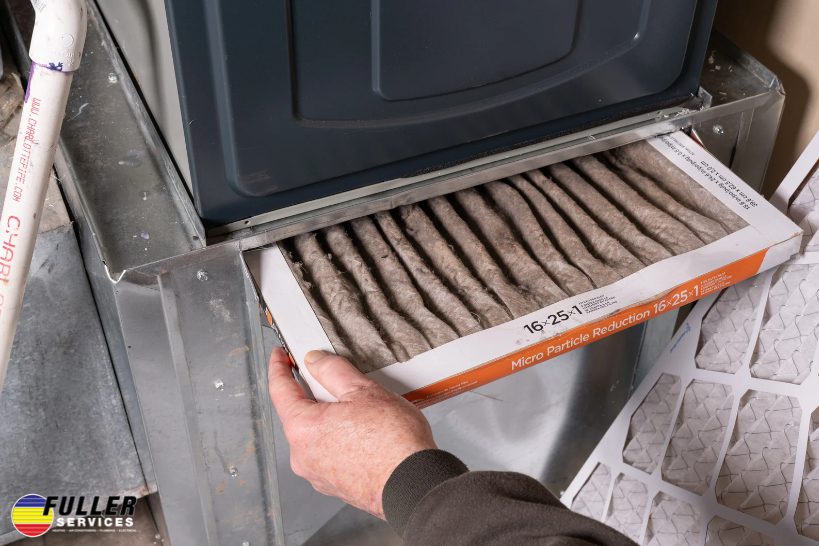
Yes. A clogged filter can make a furnace blow cold air, because it restricts airflow and lets the heat exchanger overheat. Carrier describes the chain: restricted airflow raises the temperature, the high-limit switch shuts the burners down, and the blower keeps running to cool the equipment. The vents then deliver unheated air.
Check the filter with the thermostat set to OFF. Slide it out, read the size and airflow arrow on the frame, and install a clean filter of the same size with the arrow pointing toward the blower. Open every supply register and uncover each return grille. Closing vents to push heat elsewhere raises pressure and makes the problem worse.
North Alabama winters mean frequent heating cycles and plenty of household dust, so filters load up faster than many homeowners expect. Seasonal furnace maintenance catches a restricted filter and airflow path before the limit switch trips.
Better filtration also slows the buildup. An indoor air quality upgrade can reduce how quickly filters clog and keep the air cleaner between changes.
A limit switch that resets itself points to an airflow problem. A flame rollout switch is different. If it trips, do not reset it. A tripped rollout switch can mean a venting failure or a cracked heat exchanger, and Fuller’s technicians in the Shoals treat that as a service call.
Has the pilot light or ignitor failed?
A failed ignitor or an out pilot light leaves the burners off while the blower keeps moving air. Most newer furnaces use electronic ignition instead of a standing pilot, so check your manual or the rating label to see which type you have before you do anything else.
If you have a standing pilot and no gas odor, follow the relighting steps printed on the appliance exactly. If the pilot will not light, will not stay lit, or looks abnormal, stop. A thermocouple, ignitor, flame sensor, pressure switch, or control board fault may be involved.
A pattern of burners lighting for a few seconds and then shutting off often points to a dirty flame sensor. Carrier notes that a sensor that cannot detect the flame makes the furnace shut the burners down while the blower runs. Cleaning it means opening the furnace, so leave that to a licensed technician. Fuller offers furnace repair across the Shoals for ignition and flame sensing faults.
Is your gas supply interrupted?
A gas furnace cannot heat without fuel, so a supply interruption is one of the four checks to rule out. Never touch gas valves, burners, or supply lines. In a North Alabama home, limit yourself to these outside-the-cabinet checks:
- Test another gas appliance, such as a stove, to confirm gas service.
- Check for a utility outage notice, or the tank level if you use propane.
- Confirm the furnace service switch and the breaker are on. Reset a tripped breaker once at most.
If you smell rotten eggs or gas, do not flip switches, use a phone inside, or light anything. Leave the building and call your gas utility or 911 from outside.
If the stove works, the power is on, and the furnace still blows cold air, the cause is likely inside the furnace. That is the point to stop checking and call a licensed technician.
Do you have a heat pump rather than a furnace?
A heat pump can blow cool air while working normally, so a cool vent does not always mean a fault. About 39% of Alabama homes heat mainly with a central heat pump, according to the U.S. Energy Information Administration, so it is worth ruling out first. You likely have one if your outdoor unit runs in winter or your thermostat shows AUX or EM HEAT.
Heat pump air is warmer than the room but usually cooler than furnace air, and it can feel drafty against skin. A gas furnace has a temperature rise printed on its rating plate. A heat pump has no such figure to compare, so judge it by whether the house keeps reaching your set temperature.
In damp winter weather, frost builds on the outdoor coil. The system briefly reverses to melt it, and American Standard notes that cool air can come from the vents for a few minutes during that defrost cycle until auxiliary heat offsets it. Auxiliary heat comes on by itself in cold weather or during defrost. Emergency heat is a manual backup for a compressor failure, not an efficiency setting.
This table separates normal heat pump behavior from a real problem:
| What you notice | Likely normal heat pump behavior | Possible problem | What to do |
|---|---|---|---|
| Mildly warm air that feels cooler than a furnace | Normal heating operation | None | Check that the home reaches your set temperature |
| Cool airflow for a few minutes, sometimes with steam at the outdoor unit | Defrost cycle melting frost off the outdoor coil | Faulty defrost control or failed auxiliary heat | Wait for regular heating to resume and watch the room temperature |
| AUX HEAT indicator displays | Electric heat strips assisting in cold weather or during defrost | Manual EM HEAT mode left on | Keep the thermostat on standard HEAT mode |
| Continuous cold air and a falling room temperature | None | Refrigerant leak or failed heating elements | Shut the unit off and call for service |
Turn the system off if the house keeps cooling down, the outdoor unit is encased in solid ice, or breakers trip. Fuller’s heating services in Muscle Shoals and Florence include heat pump diagnosis and repair.
Are your ducts leaking heat before it reaches the vents?
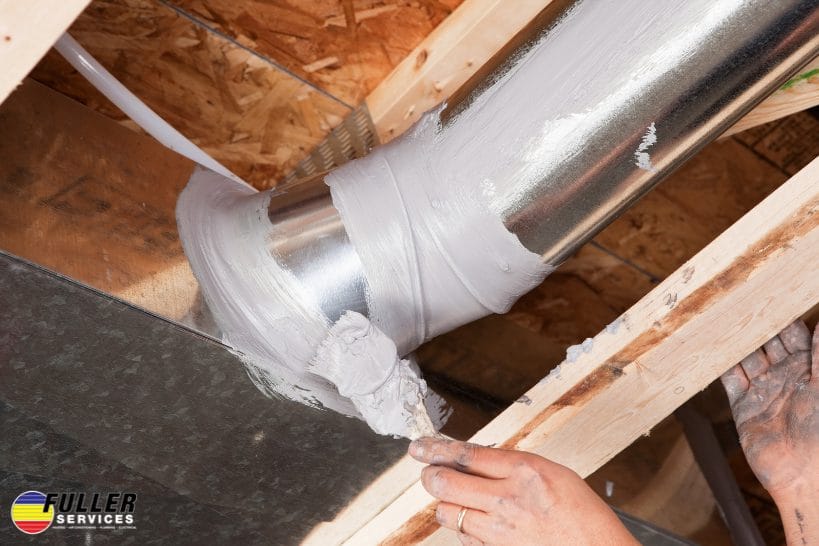
Duct leaks explain lukewarm air and uneven rooms, but they rarely explain a furnace that produces no heat at all. When warm air escapes into an unconditioned space, vents feel weak and drafty even though the equipment is working.
Three safe visual checks on accessible ductwork:
- Check joints near the air handler for gaps, separated seams, or fallen insulation.
- Look at flexible ducts for crushed runs, sharp kinks, or lines pulled off their collars.
- Note whether the cold rooms sit farthest from the unit or over a crawl space.
In Florence and Athens homes, ducts often run through vented crawl spaces and attics, where winter air strips heat from supply ducts. Leaks on the return side also pull cold, unconditioned air into the system. Seal small, accessible seams with mastic or foil-backed HVAC tape, not cloth duct tape, and stay out of low-clearance or hazardous crawl spaces.
If air feels cold at every register and the burners shut off right away, delivery is not the problem. Look at the ignition and limit switch checks above.
Why your furnace blows warm, then cold, then shuts off
Warm air followed by cool air and a shutdown is short cycling, and it is not normal. A safety switch is tripping, or the furnace cannot finish its ignition sequence. Common triggers are a dirty filter tripping the high-limit switch, a fouled flame sensor, or a pressure switch fault.
You can gather useful facts from outside the cabinet without opening anything:
- Note whether the burners light and go out after a few seconds.
- Listen for repeated startup attempts within a few minutes.
- Read any blinking diagnostic light code through the sight glass, and photograph it.
Leave the blower door closed. Removing it cuts power through the safety interlock, and a technician reads the fault better with the furnace left as it was. Never bypass a limit, rollout, pressure, or float switch.
During North Alabama hard freezes, an exposed condensate line in a crawl space can freeze and shut down a high-efficiency furnace. Water pooling around the unit is another reason to call Fuller instead of resetting it.
When to stop troubleshooting and call Fuller
Stop troubleshooting after you have checked the fan setting, the filter, the vents, and the basic gas and power indicators. Call Fuller if a clean filter and open vents do not restore steady heat in your North Alabama home. Also call for any of these:
- Cold air with the fan on AUTO and a clean filter
- A furnace that lights and then shuts off, or never ignites
- Repeated limit switch trips, fault codes, or tripped breakers
- Water leaking from a high-efficiency furnace
- A frozen outdoor heat pump unit, or no auxiliary heat in cold weather
- Unusual noises, soot, or a burning smell
Carbon monoxide is the one urgent case. The Consumer Product Safety Commission says that when a CO alarm sounds, you should move outside to fresh air right away and call 911 or the fire department. Do a head count, and do not go back in until responders say it is safe. Soot, smoke, a gas odor, or anyone feeling dizzy means the same thing: leave first.
A Fuller diagnostic finds whether the cause is thermostat setup, airflow, ignition, a safety control, condensate, duct delivery, a heat pump defrost cycle, or a failed part. Fuller handles HVAC repair across the Shoals under AL HVAC License #91114, with repairs priced in an estimate before work begins.
Homeowners who want fewer cold-air surprises can ask about Comfort Club, which pairs a yearly furnace tune-up with priority service.
Frequently asked questions
Why is my furnace blowing cold air even though the heat is on?
A furnace usually blows cold air while set to heat because of a fan stuck on ON, a dirty filter, or an ignition problem. Set the fan to AUTO, replace a clogged filter, and open all vents. If the burners never light, the blower still moves unheated air, and a Fuller technician can find the cause.
Should my thermostat fan be on AUTO or ON?
Set the thermostat fan to AUTO for normal heating. The ON setting runs the blower constantly, so room temperature air moves through the vents between heating cycles and feels cold. Carrier names the fan set to ON as the most common cause of a furnace blowing cold air.
Can a dirty filter make my furnace blow cold air?
Yes. A clogged filter restricts airflow and lets the heat exchanger overheat. The high-limit switch then shuts the burners off while the blower keeps running to cool the cabinet. Replace the filter with the thermostat off, and never bypass or force a safety switch.
Why does my furnace blow warm air, then cold air, then shut off?
That pattern is short cycling, where a safety control interrupts heating. Typical causes are a dirty flame sensor, a limit switch tripping from poor airflow, or a blocked condensate drain. Repeated cycles need diagnosis from a licensed technician before parts suffer damage.
Why is my heat pump blowing cool air in North Alabama?
A heat pump often blows cooler air than a furnace, and it blows cooler air for a short time during defrost. That can be normal. Continuous cold air with a falling indoor temperature is not normal, and it can point to failed heating elements or a refrigerant leak.
Can I fix a furnace blowing cold air myself?
Homeowners can safely adjust thermostat settings, change filters, and open blocked vents. Any work on gas valves, electrical controls, flame sensors, or safety switches belongs to a licensed professional. If those basic checks do not restore heat, Fuller can diagnose the system in Northwest Alabama.